
Pilates isn’t just for niche studios anymore — it’s exploded into a top fitness category across the U.S., topping ClassPass lists for popularity growth and sustaining engagement across all demographics. Once the secret weapon of dancers and rehabilitation clinics, this century-old method has firmly planted itself in the center of modern fitness culture.
From viral TikTok trends like “Wall Pilates” to the surge of booked-out Reformer classes in every major city, the data is undeniable. In 2024 alone, Pilates bookings on platforms like ClassPass jumped by an astounding 84%, securing its spot as the number one most-booked workout for consecutive years. But what is driving this massive shift from exclusive luxury to household staple? The answer lies in a perfect storm of accessibility, a cultural shift toward longevity, and undeniable results.
The Shift: How Pilates Became the “It” Workout
The transformation of Pilates as the mainstream workout didn’t happen overnight, but the post-pandemic world accelerated it significantly. People emerged from lockdowns craving connection and movement that felt restorative rather than punishing. High-intensity interval training (HIIT) and “no pain, no gain” mentalities have largely been traded for sustainable, low-impact modalities that prioritize how you feel over just how you look.
Social media played a pivotal role. The “Pink Pilates Princess” aesthetic on TikTok introduced the practice to Gen Z, framing it as a lifestyle of self-care rather than a chore. Meanwhile, the rise of at-home variations—like Wall Pilates—removed the financial barrier of expensive studio memberships, allowing millions to try the method in their living rooms.
The Core Four: Unpacking the Physical Benefits
While trends come and go, Pilates has stayed because it works. It is valued for core strength, mobility, low impact, and long-term health benefits. Here is why it conquers the fitness hierarchy:
1. Unmatched Core Strength
When we say “core” in Pilates, we aren’t just talking about vanity abs. We are referring to the “Powerhouse”—the deep abdominal muscles, pelvic floor, and back muscles that support your entire skeletal structure.
- Deep Activation: Unlike crunches that target surface muscles, Pilates engages the transversus abdominis (the body’s natural corset).
- Functional Strength: A stronger core translates to better posture at your desk, less back pain, and improved performance in other sports like running or weightlifting.
2. Mobility and Injury Prevention
Pilates is one of the few workouts that strengthens muscles while simultaneously lengthening them. This “eccentric contraction” creates long, lean muscle tone without bulk, but more importantly, it increases joint mobility.
- Spinal Health: Exercises focus on segmental spinal movement, teaching your vertebrae to move independently, which is crucial for combating the stiffness of modern sedentary life.
- Rehabilitation: Because it is low impact, it is often the first step in recovery for those with injuries, allowing them to stay active without stressing their joints.
Beyond the Mat: Mental Health and Longevity
The modern fitness consumer is looking for more than a calorie burn; they want longevity. Pilates aligns perfectly with the “healthspan” movement—the desire to live healthy for as long as possible, not just live long.
- Mind-Body Connection: Pilates requires intense concentration. You cannot doom-scroll while balancing on a Reformer. This focus on breath and precision acts as a moving meditation, significantly lowering cortisol levels and reducing stress.
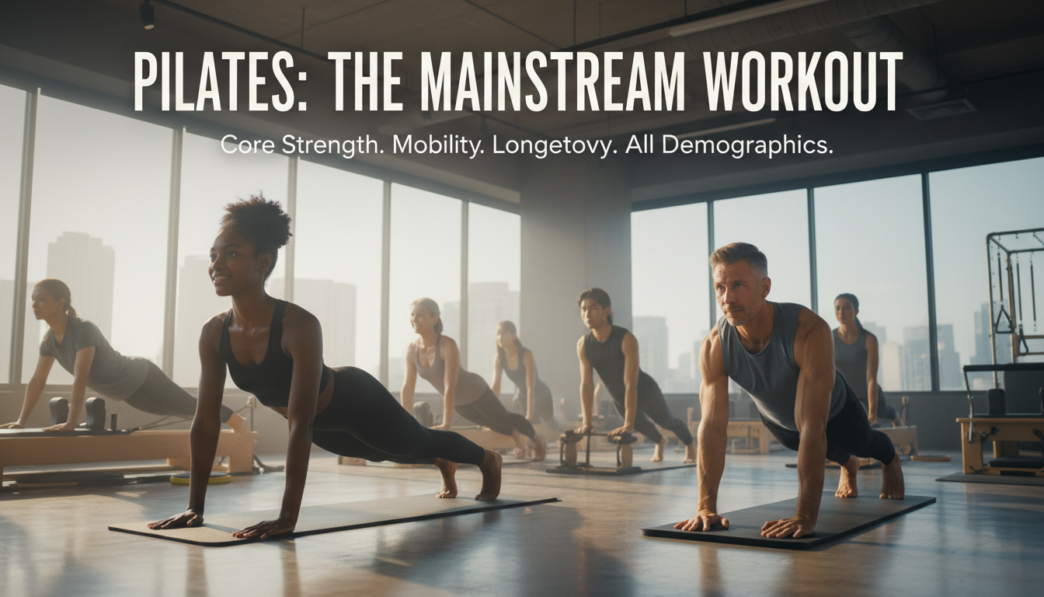
- Sustainable Aging: Unlike high-impact running which can wear down knees over decades, Pilates is a “forever practice.” It is common to see classes mixed with 20-year-olds and 70-year-olds, all performing the same movements adapted to their level.
Who Is Doing Pilates? (Demographics & Trends)
The demographic data for 2024 and 2025 reveals that Pilates as the mainstream workout is more inclusive than ever.
- The Gen Z Surge: Driven by aesthetics and mental health awareness, younger practitioners are flocking to studios, often viewing it as a social activity to do with friends.
- The Rise of Men (“Brolates”): Male participation has seen a double-digit percentage increase. Professional athletes (from NFL players to NBA stars) have publicly credited Pilates for their durability, helping to shed the stigma that it is “just stretching for women.”
- The Hybrid Athlete: It is no longer Pilates or the gym. The current trend is Pilates and strength training. People are using Pilates to mobilize their joints on recovery days so they can squat heavier and run faster on training days.
Getting Started: Reformer vs. Mat vs. Hybrid
If you are ready to join the movement, the variety of options can be overwhelming. Here is a quick guide to finding your fit:
- Mat Pilates: Performed on the floor using your body weight.
- Best for: Beginners on a budget, building foundational core strength, and home workouts.
- Reformer Pilates: Uses a bed-like machine with springs and pulleys to add resistance.
- Best for: those who want faster results, tactile feedback, and a greater range of motion.
- Hybrid/Fusion Classes: Blends Pilates with boxing, HIIT, or heavy weights.
- Best for: The “sweat junkie” who loves the principles of Pilates but craves a higher heart rate.
Conclusion
Pilates has successfully shed its reputation as an exclusive, niche practice to become the backbone of American fitness culture. Its explosion into the mainstream is well-earned, offering a unique blend of strength, mobility, and mental clarity that fits the needs of a stressed, sedentary, but health-conscious population. Whether you are looking to rehabilitate an injury, improve your posture, or simply find a workout you can stick with for decades, Pilates proves that low impact can yield high returns.
Ready to feel the difference? Book a local Mat or Reformer class this week and discover why millions have made Pilates their movement of choice.